

The Importance of Precision Tools in Hair Restoration Surgery

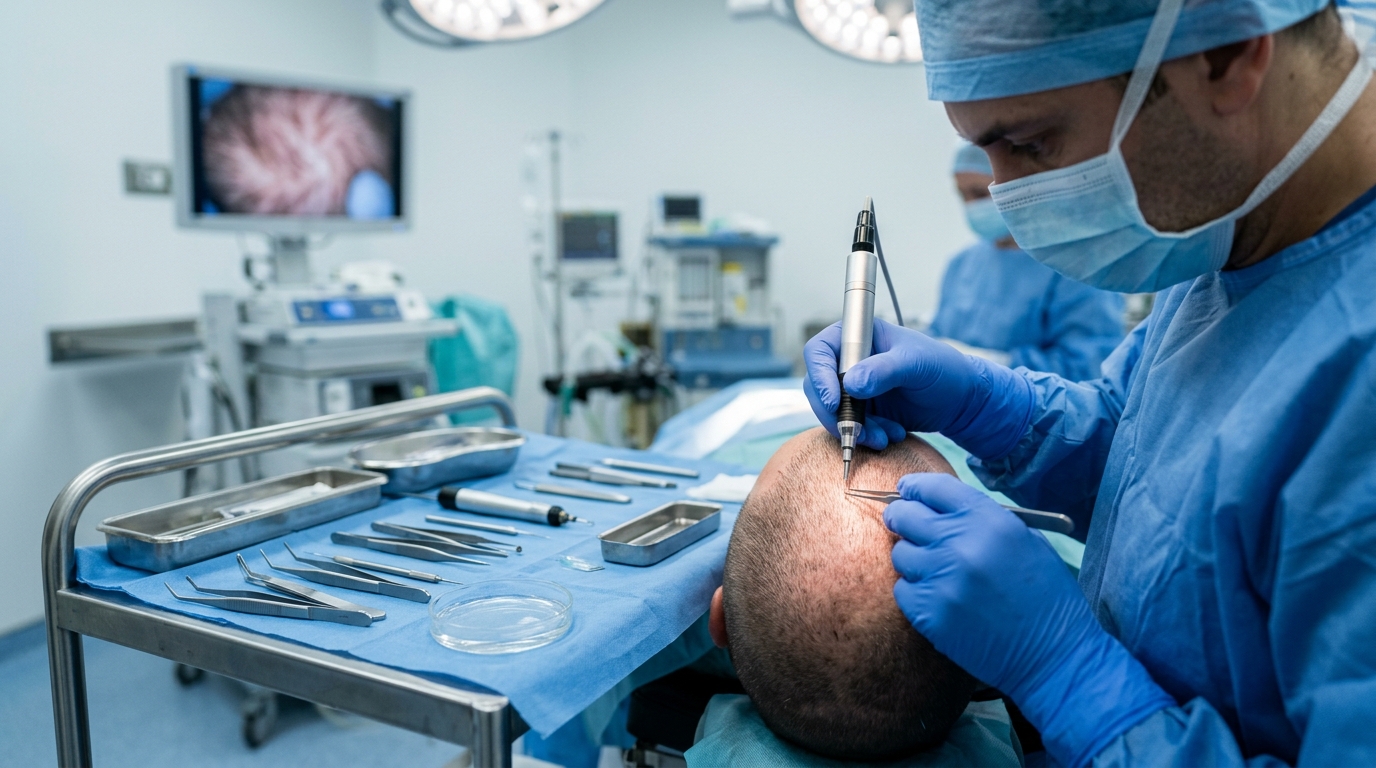
Precision Tools in Hair Restoration Surgery play an important role in supporting careful extraction, graft handling, and implantation. Hair restoration procedures involve many small and detailed steps, so the instruments used by a professional clinic need to be selected according to the procedure, technique, and handling requirements.
From FUE punches and extracting forceps to DHI implanters and graft-handling instruments, each tool has a specific purpose. Well-designed instruments can help professionals maintain better control during different stages of a hair restoration procedure while keeping the clinical workflow organized.
Why Precision Matters in Hair Restoration Surgery
Hair restoration involves working with individual follicular units and a relatively small treatment area. Because of this, precision is important throughout the procedure.
The instruments used for extraction, graft handling, and implantation should provide suitable control and be appropriate for their intended application. A properly selected instrument can make detailed tasks easier to manage and can support a consistent workflow.
Precision does not depend on the instrument alone. Professional experience, technique, patient-specific factors, and appropriate clinical practices all contribute to the overall procedure.
The Role of FUE Punches in Precise Extraction
Follicular Unit Extraction, commonly known as FUE, involves the removal of individual follicular units from the donor area. FUE punches are specifically designed for this stage of the procedure.
Different punch diameters and designs are available for different applications. The appropriate selection depends on factors such as graft characteristics, procedure requirements, and practitioner preference.
A suitable FUE punch can provide controlled access to the follicular unit and support an organized extraction process. For professional clinics, having a range of appropriate punch sizes can be useful when different procedures require different specifications.
Extracting Forceps for Careful Graft Handling
After follicular units are extracted, they need to be handled carefully. Extracting and graft-handling forceps are commonly used to pick up, position, and transfer grafts during preparation.
Fine tips can provide the control required for handling small follicular units. The design and balance of the forceps can also affect how comfortably they can be used during detailed work.
At this stage, careful handling is important. Instruments should be selected according to their intended use, while professionals should follow appropriate clinical techniques for graft management.
DHI Implanters and Controlled Implantation

Direct Hair Implantation, or DHI, uses specialized implanter instruments for placing prepared grafts into the recipient area.
DHI implanters can help practitioners control the placement of individual grafts according to the planned procedure. Different sizes and configurations may be available depending on the graft characteristics and professional preference.
The purpose of a precision implanter is not to replace professional skill. Instead, it provides a specialized instrument that can support controlled graft placement during the implantation stage.
Sapphire Blades and Recipient Site Preparation
Recipient site preparation is another stage where precision can be important. Specialized blades, including sapphire blades used in some hair transplant techniques, are designed for creating recipient sites according to the practitioner’s technique.
Blade size and specifications should be selected according to the procedure and professional requirements. Using the correct instrument for the intended application can help maintain an organized workflow.
As with all surgical instruments, proper handling, processing, and maintenance are essential for professional use.
Graft Handling Instruments Support an Organized Workflow
Grafts may pass through several stages between extraction and implantation. Graft trays, bowls, dishes, forceps, and other specialized instruments can help keep the workflow organized.
A dedicated graft-handling setup allows professionals to arrange the required instruments and materials for different stages of the procedure. Stainless-steel trays and bowls can also be useful components of a reusable clinical instrument setup when processed according to appropriate protocols.
The exact setup can vary from one clinic to another based on procedure type and practitioner preference.
Instrument Design and Material Quality
Precision instruments need to be manufactured with attention to their intended application. Important considerations may include tip design, dimensions, balance, surface finish, and material.
Stainless steel is widely used for many surgical and hair transplant instruments because of its properties and suitability for reusable medical instruments when appropriate grades and processing protocols are followed.
Clinics should review product specifications carefully before purchasing instruments and ensure that the selected tools match their intended clinical application.
Choosing the Right Hair Transplant Instruments
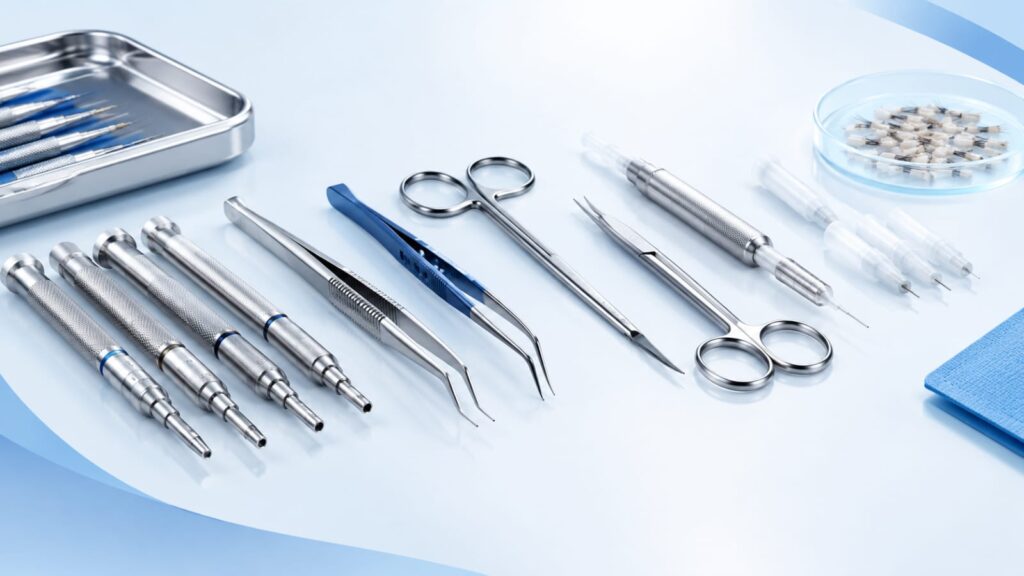
Selecting hair transplant instruments should be based on the procedure and specific requirements of the clinic rather than simply choosing the largest or most advanced-looking tool.
Before purchasing, clinics and distributors can consider:
- Instrument type and intended application
- Tip size and dimensions
- Material and construction
- Compatibility with FUE or DHI procedures
- Ease of handling
- Durability and maintenance
- Sterilization and processing requirements
- Practitioner preference
A well-planned instrument selection can help create a more organized and practical clinical setup.
Precision Tools for FUE and DHI Procedures
FUE and DHI procedures use different instruments for different stages of the workflow. FUE may involve punches, extracting forceps, graft-handling tools, and other specialized instruments. DHI may require implanters along with appropriate forceps and graft-handling equipment.
For this reason, clinics should build their instrument sets around the procedures they actually perform. A carefully selected collection can help professionals keep the required tools available for extraction, graft preparation, and implantation.
Ashtec Surgical World offers a range of hair transplant instruments designed for professional applications, including FUE and DHI instrument categories. Clinics, surgeons, and distributors can explore the available hair transplant instruments and select products according to their specific requirements.
Maintaining Precision Through Proper Instrument Care
Even a well-designed instrument needs appropriate care. Instruments should be cleaned, inspected, processed, and stored according to the manufacturer’s instructions and applicable clinical protocols.
Regular inspection can help identify issues such as damaged tips, corrosion, loose components, or other problems that may affect the instrument’s intended function.
Proper maintenance also helps clinics keep their instrument inventory organized and ready for professional use.
How Advanced Instruments Support Hair Restoration
Modern hair restoration depends on a combination of professional expertise, appropriate technique, patient assessment, and suitable instruments. Precision tools can support different stages of the workflow, but they should always be used by trained professionals within appropriate clinical protocols.
The main value of specialized instruments is their ability to provide tools designed for specific tasks. FUE punches support extraction, forceps support graft handling, implanters support implantation, and graft trays and bowls help organize the working environment.
Choosing instruments according to these individual requirements can contribute to a more structured and efficient workflow.
Frequently Asked Questions
1. Why are precision tools important in hair restoration surgery?
They provide specialized control for extraction, graft handling, and implantation.
2. Which instruments are used for FUE?
FUE commonly uses punches, extracting forceps, and graft-handling instruments.
3. What instruments are used in DHI?
DHI commonly uses specialized implanters, forceps, and graft-handling tools.
4. Are sapphire blades used in hair transplantation?
Yes, sapphire blades are used in some hair transplant techniques for recipient site preparation.
5. How should hair transplant instruments be maintained?
They should be cleaned, inspected, processed, and stored according to appropriate manufacturer and clinical protocols.
6. How do I choose hair transplant instruments?
Consider the procedure, instrument specifications, material, handling requirements, and professional preference.
Conclusion
Precision Tools in Hair Restoration Surgery provide specialized support at several important stages of a hair restoration procedure. From FUE extraction and graft handling to recipient site preparation and DHI implantation, the right instruments can help professionals maintain an organized and controlled workflow.
For clinics and distributors, instrument selection should focus on intended application, specifications, quality, maintenance requirements, and procedure compatibility. With appropriate instruments and professional technique, a hair restoration clinic can maintain a practical setup designed around its specific workflow.
The Importance of Precision Tools in Hair Restoration Surgery
Precision Tools in Hair Restoration Surgery play an important role in supporting careful extraction, graft handling, and implantation. Hair restoration procedures involve many small and detailed steps, so the instruments used by a professional clinic need to be selected according to the procedure, technique, and handling requirements.
From FUE punches and extracting forceps to DHI implanters and graft-handling instruments, each tool has a specific purpose. Well-designed instruments can help professionals maintain better control during different stages of a hair restoration procedure while keeping the clinical workflow organized.
Why Precision Matters in Hair Restoration Surgery
Hair restoration involves working with individual follicular units and a relatively small treatment area. Because of this, precision is important throughout the procedure.
The instruments used for extraction, graft handling, and implantation should provide suitable control and be appropriate for their intended application. A properly selected instrument can make detailed tasks easier to manage and can support a consistent workflow.
Precision does not depend on the instrument alone. Professional experience, technique, patient-specific factors, and appropriate clinical practices all contribute to the overall procedure.
The Role of FUE Punches in Precise Extraction
Follicular Unit Extraction, commonly known as FUE, involves the removal of individual follicular units from the donor area. FUE punches are specifically designed for this stage of the procedure.
Different punch diameters and designs are available for different applications. The appropriate selection depends on factors such as graft characteristics, procedure requirements, and practitioner preference.
A suitable FUE punch can provide controlled access to the follicular unit and support an organized extraction process. For professional clinics, having a range of appropriate punch sizes can be useful when different procedures require different specifications.
Extracting Forceps for Careful Graft Handling
After follicular units are extracted, they need to be handled carefully. Extracting and graft-handling forceps are commonly used to pick up, position, and transfer grafts during preparation.
Fine tips can provide the control required for handling small follicular units. The design and balance of the forceps can also affect how comfortably they can be used during detailed work.
At this stage, careful handling is important. Instruments should be selected according to their intended use, while professionals should follow appropriate clinical techniques for graft management.
DHI Implanters and Controlled Implantation
Direct Hair Implantation, or DHI, uses specialized implanter instruments for placing prepared grafts into the recipient area.
DHI implanters can help practitioners control the placement of individual grafts according to the planned procedure. Different sizes and configurations may be available depending on the graft characteristics and professional preference.
The purpose of a precision implanter is not to replace professional skill. Instead, it provides a specialized instrument that can support controlled graft placement during the implantation stage.
Sapphire Blades and Recipient Site Preparation
Recipient site preparation is another stage where precision can be important. Specialized blades, including sapphire blades used in some hair transplant techniques, are designed for creating recipient sites according to the practitioner’s technique.
Blade size and specifications should be selected according to the procedure and professional requirements. Using the correct instrument for the intended application can help maintain an organized workflow.
As with all surgical instruments, proper handling, processing, and maintenance are essential for professional use.
Graft Handling Instruments Support an Organized Workflow
Grafts may pass through several stages between extraction and implantation. Graft trays, bowls, dishes, forceps, and other specialized instruments can help keep the workflow organized.
A dedicated graft-handling setup allows professionals to arrange the required instruments and materials for different stages of the procedure. Stainless-steel trays and bowls can also be useful components of a reusable clinical instrument setup when processed according to appropriate protocols.
The exact setup can vary from one clinic to another based on procedure type and practitioner preference.
Instrument Design and Material Quality
Precision instruments need to be manufactured with attention to their intended application. Important considerations may include tip design, dimensions, balance, surface finish, and material.
Stainless steel is widely used for many surgical and hair transplant instruments because of its properties and suitability for reusable medical instruments when appropriate grades and processing protocols are followed.
Clinics should review product specifications carefully before purchasing instruments and ensure that the selected tools match their intended clinical application.
Choosing the Right Hair Transplant Instruments
Selecting hair transplant instruments should be based on the procedure and specific requirements of the clinic rather than simply choosing the largest or most advanced-looking tool.
Before purchasing, clinics and distributors can consider:
- Instrument type and intended application
- Tip size and dimensions
- Material and construction
- Compatibility with FUE or DHI procedures
- Ease of handling
- Durability and maintenance
- Sterilization and processing requirements
- Practitioner preference
A well-planned instrument selection can help create a more organized and practical clinical setup.
Precision Tools for FUE and DHI Procedures
FUE and DHI procedures use different instruments for different stages of the workflow. FUE may involve punches, extracting forceps, graft-handling tools, and other specialized instruments. DHI may require implanters along with appropriate forceps and graft-handling equipment.
For this reason, clinics should build their instrument sets around the procedures they actually perform. A carefully selected collection can help professionals keep the required tools available for extraction, graft preparation, and implantation.
Ashtec Surgical World offers a range of hair transplant instruments designed for professional applications, including FUE and DHI instrument categories. Clinics, surgeons, and distributors can explore the available hair transplant instruments and select products according to their specific requirements.
Maintaining Precision Through Proper Instrument Care
Even a well-designed instrument needs appropriate care. Instruments should be cleaned, inspected, processed, and stored according to the manufacturer’s instructions and applicable clinical protocols.
Regular inspection can help identify issues such as damaged tips, corrosion, loose components, or other problems that may affect the instrument’s intended function.
Proper maintenance also helps clinics keep their instrument inventory organized and ready for professional use.
How Advanced Instruments Support Hair Restoration
Modern hair restoration depends on a combination of professional expertise, appropriate technique, patient assessment, and suitable instruments. Precision tools can support different stages of the workflow, but they should always be used by trained professionals within appropriate clinical protocols.
The main value of specialized instruments is their ability to provide tools designed for specific tasks. FUE punches support extraction, forceps support graft handling, implanters support implantation, and graft trays and bowls help organize the working environment.
Choosing instruments according to these individual requirements can contribute to a more structured and efficient workflow.
Frequently Asked Questions
1. Why are precision tools important in hair restoration surgery?
They provide specialized control for extraction, graft handling, and implantation.
2. Which instruments are used for FUE?
FUE commonly uses punches, extracting forceps, and graft-handling instruments.
3. What instruments are used in DHI?
DHI commonly uses specialized implanters, forceps, and graft-handling tools.
4. Are sapphire blades used in hair transplantation?
Yes, sapphire blades are used in some hair transplant techniques for recipient site preparation.
5. How should hair transplant instruments be maintained?
They should be cleaned, inspected, processed, and stored according to appropriate manufacturer and clinical protocols.
6. How do I choose hair transplant instruments?
Consider the procedure, instrument specifications, material, handling requirements, and professional preference.
Conclusion
Precision Tools in Hair Restoration Surgery provide specialized support at several important stages of a hair restoration procedure. From FUE extraction and graft handling to recipient site preparation and DHI implantation, the right instruments can help professionals maintain an organized and controlled workflow.
For clinics and distributors, instrument selection should focus on intended application, specifications, quality, maintenance requirements, and procedure compatibility. With appropriate instruments and professional technique, a hair restoration clinic can maintain a practical setup designed around its specific workflow.