

How Advanced Instruments Improve Hair Restoration Procedures

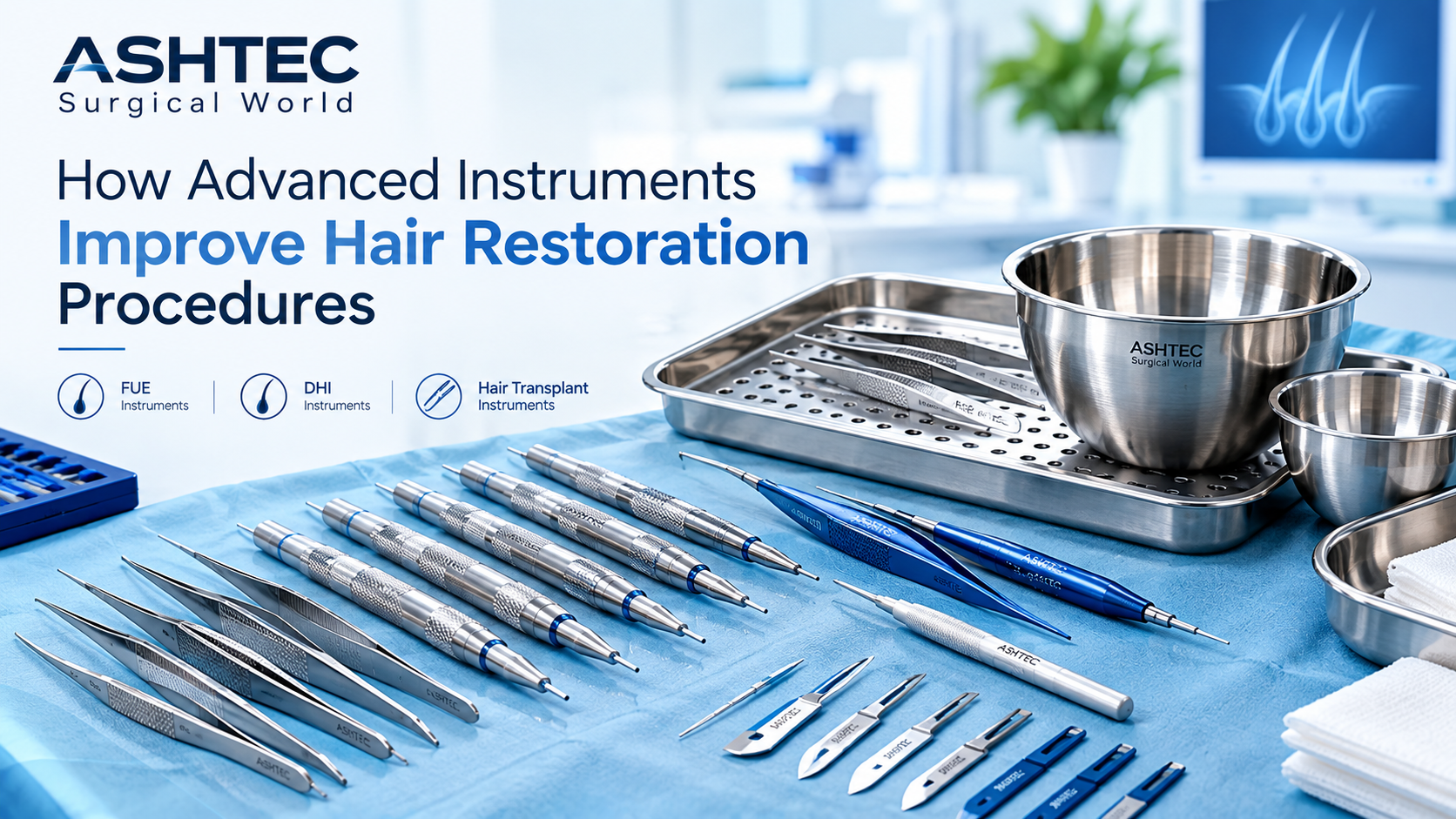
Hair Restoration Procedures
Hair restoration is a detail-oriented procedure where precision, handling, and consistency can make a significant difference in the overall workflow. While the surgeon’s experience and technique remain essential, the instruments used during a hair restoration procedure also play an important role.
Modern hair transplant procedures such as FUE and DHI require specialized instruments for follicle extraction, graft handling, site creation, and implantation. Well-designed instruments can help professionals work with greater control and maintain an organized procedure from beginning to end.
For clinics looking to improve their hair restoration setup, choosing suitable hair transplant instruments is an important part of maintaining a professional and efficient workflow.
The Role of Advanced Instruments in Hair Restoration
Hair restoration involves several delicate steps. Depending on the procedure, a clinic may need punches, forceps, blades, implanters, graft handling tools, and other specialized equipment.
Advanced instruments are generally designed with attention to factors such as tip size, shape, grip, material, balance, and overall finish. These details can help professionals select instruments that match their preferred technique and procedure requirements.
The goal is not simply to use more instruments. Instead, the right instruments should support controlled handling and a consistent workflow.
Improved Precision During Follicular Extraction
Follicular Unit Extraction (FUE) requires careful extraction of individual follicular units from the donor area. The punch is one of the most important instruments used during this stage.
Different procedures may require different punch diameters and tip configurations. Selecting an appropriate punch according to the graft characteristics, extraction technique, and professional preference can help provide better control during the extraction process.
Clinics can explore different options through our FUE Instruments collection.
A properly selected instrument can also make it easier for the practitioner to maintain a consistent technique throughout the procedure. Instrument quality, however, should always be considered alongside training, clinical judgment, and proper operating protocols.
Better Graft Handling
After extraction, grafts need to be handled carefully before implantation. Excessive handling or inappropriate instruments can make this stage more difficult.
Fine and well-finished forceps are commonly used for controlled graft handling. Their design can influence grip and maneuverability, particularly when dealing with small follicular units.
Using dedicated hair transplant graft handling instruments can help clinics organize this part of the procedure more effectively. Graft dishes, bowls, trays, and forceps can also help create a structured working area.
For clinics reviewing their instrument requirements, our Hair Transplant Instruments collection provides access to specialized tools for different stages of the procedure.
Greater Control During DHI Procedures

Direct Hair Implantation (DHI) involves placing grafts into the recipient area using an implantation device. This technique requires careful graft loading and controlled placement.
DHI instruments are designed for specific stages of the implantation process. The choice of implanter and compatible components can depend on the practitioner’s technique, graft characteristics, and procedural preferences.
High-quality instruments can provide a more consistent feel in the hand and may help professionals maintain better control during repetitive movements.
Clinics and distributors can explore our range of DHI Instruments when reviewing equipment for DHI procedures.
Consistency Across the Procedure
One advantage of using properly selected instruments is consistency. Hair restoration procedures can involve hundreds or thousands of individual grafts, making an organized workflow particularly important.
When instruments have consistent dimensions, reliable construction, and suitable ergonomics, professionals can become familiar with their handling characteristics.
This does not replace clinical skill. Instead, suitable instruments can complement the practitioner’s established technique and help maintain a predictable workflow.
Instrument Material and Manufacturing Quality
The material used to manufacture a surgical instrument can affect its durability, finish, and suitability for repeated professional use.
Stainless steel is widely used for many surgical and hair transplant instruments because of its strength, corrosion resistance, and ability to withstand appropriate cleaning and sterilization processes.
However, material alone does not determine instrument quality. Manufacturing accuracy, finishing, alignment, surface quality, and inspection are also important considerations.
Clinics and distributors should therefore look beyond appearance when selecting instruments and review specifications that are relevant to their intended use.
Ergonomic Design Can Support Workflow
Hair restoration procedures can be lengthy and involve repeated movements. Instrument ergonomics can therefore be an important consideration.
A comfortable grip, appropriate weight, balanced construction, and suitable tip design can make an instrument easier to handle during detailed work.
Different professionals may prefer different instrument shapes and sizes, so there is no single design that suits every procedure or practitioner.
The practical approach is to select instruments according to the procedure, technique, and individual working preferences.
Advanced Instruments and Professional Efficiency
Advanced instruments do not automatically make a procedure faster or better. Their value comes from how well they fit into the professional’s established workflow.
For example, clearly organized extraction instruments can make preparation easier, while dedicated graft handling tools can help keep the graft management stage structured.
Similarly, having appropriate DHI instruments available can help professionals avoid relying on unsuitable tools during implantation.
A clinic should therefore consider its complete workflow when purchasing instruments instead of selecting products based only on appearance or price.
Choosing the Right Hair Restoration Instruments

Before purchasing hair transplant instruments, clinics and distributors should consider several factors:
- Procedure type, such as FUE or DHI
- Required instrument dimensions and specifications
- Tip size and design
- Material and manufacturing quality
- Grip and ergonomic requirements
- Cleaning and sterilization requirements
- Compatibility with the intended technique
- Product consistency and quality control
- Supplier experience and technical support
It is also useful to compare specifications carefully before placing an order. Small differences in diameter, length, tip configuration, or handle design can be relevant to professional preferences.
For more information about our company and manufacturing capabilities, visit the About Us page or contact ASHTEC Surgical to discuss your requirements.
Why Instrument Quality Matters for Clinics
A professional hair restoration clinic depends on many factors, including trained personnel, proper procedures, suitable equipment, and an organized working environment.
Instruments are one part of this system. High-quality, properly maintained tools can support the practical requirements of extraction, graft handling, and implantation.
For clinics purchasing instruments in larger quantities, it can also be useful to establish a consistent procurement process. Comparing specifications, checking product quality, and communicating requirements clearly with the manufacturer can help reduce purchasing issues.
ASHTEC Surgical manufactures and exports surgical and hair transplant instruments, supplying products for professional use and international markets.
Final Thoughts
Advanced hair restoration instruments are designed to support precision, control, and workflow throughout procedures such as FUE and DHI. From extraction punches and forceps to graft handling tools and implantation instruments, each instrument has a specific role.
The most suitable choice depends on the procedure, practitioner technique, instrument specifications, and clinic requirements. Rather than choosing instruments based solely on appearance, clinics should evaluate construction, dimensions, ergonomics, material, and manufacturing consistency.
With the right combination of professional expertise and suitable instruments, clinics can maintain a more organized and controlled hair restoration workflow.
Frequently Asked Questions
1. What are advanced hair restoration instruments?
Advanced hair restoration instruments are specialized tools designed for procedures such as FUE and DHI. They can include punches, forceps, blades, graft handling tools, and implantation instruments.
2. Why are specialized instruments important for FUE?
FUE involves extracting individual follicular units, so specialized punches and forceps are used to support controlled extraction and graft handling according to the practitioner’s technique.
3. Are DHI instruments different from FUE instruments?
Yes. DHI involves direct implantation of grafts, so it commonly uses specialized implantation instruments. FUE primarily focuses on follicular extraction and graft preparation.
4. Does instrument material matter?
Yes. Material can influence durability, corrosion resistance, finish, and suitability for appropriate cleaning and sterilization processes. Stainless steel is commonly used for many surgical instruments.
5. How should clinics choose hair transplant instruments?
Clinics should consider the procedure, instrument specifications, material, ergonomics, tip design, compatibility with their technique, and supplier quality when selecting instruments.
6. Where can clinics find professional hair transplant instruments?
Clinics and distributors can explore the ASHTEC Surgical Hair Transplant Instruments range or contact ASHTEC Surgical for product and order requirements.