

Modern Hair Restoration: Tools, Techniques, and Clinical Essentials

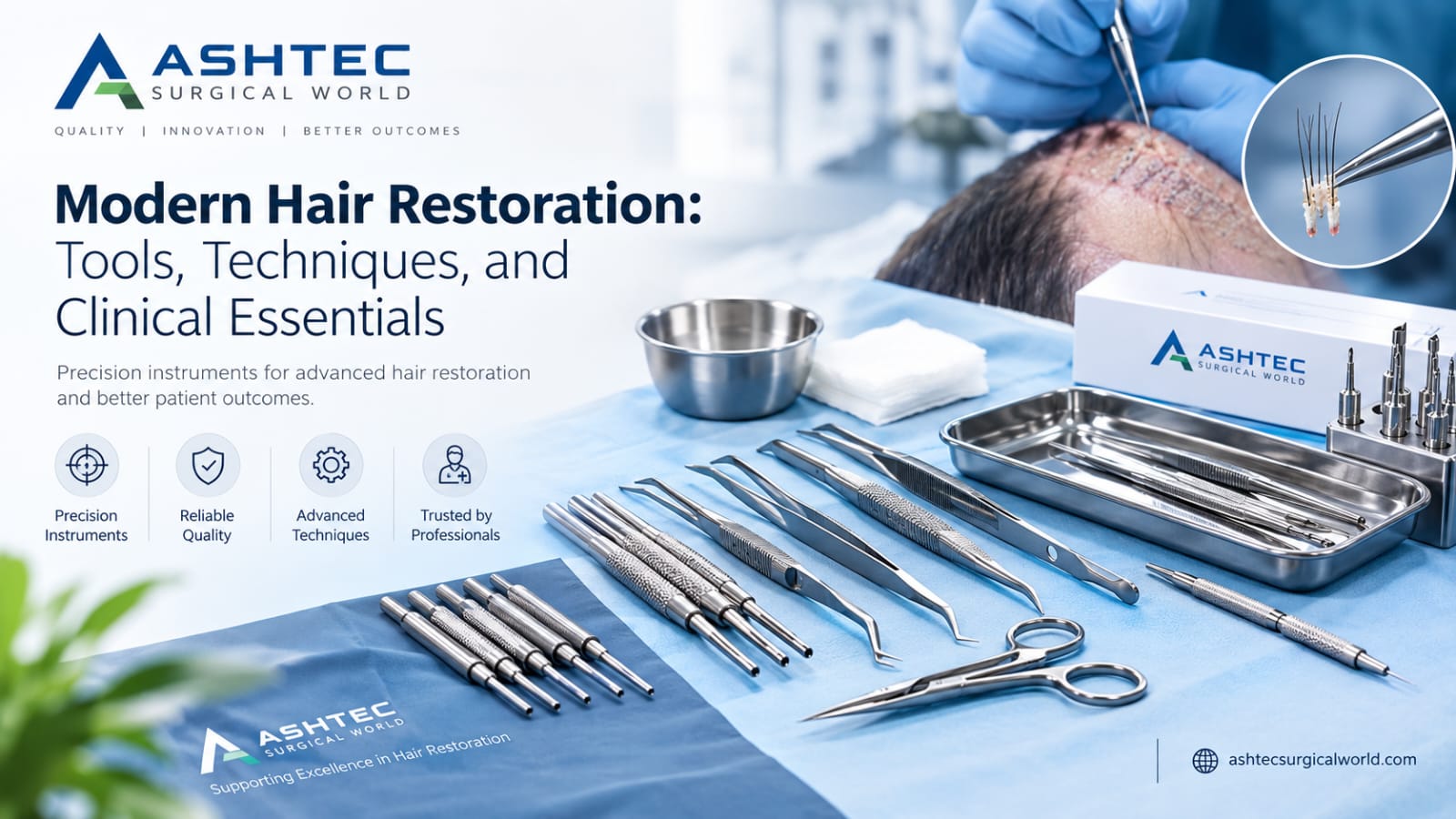
Modern hair restoration combines advanced techniques, careful treatment planning, and specialized instruments to help professionals perform hair transplant procedures with greater control. Procedures such as Follicular Unit Extraction (FUE) and Direct Hair Implantation (DHI) require suitable tools for extraction, graft handling, and implantation.
The quality and design of hair restoration instruments can play an important role in maintaining an organized clinical workflow. From FUE punches and extracting forceps to graft bowls and implantation tools, each instrument has a specific purpose.
Essential Tools for Modern Hair Restoration
A professional hair restoration procedure may require several types of specialized instruments. The exact selection depends on the procedure, surgeon’s technique, graft characteristics, and clinical requirements.
FUE Punches
FUE punches are used to extract individual follicular units from the donor area. They are available in different diameters and designs to accommodate different graft characteristics.
A suitable punch should provide controlled extraction while allowing the professional to work according to the planned procedure. Punch specifications such as diameter, tip design, and length should be considered when selecting instruments.
Hair Extracting Forceps
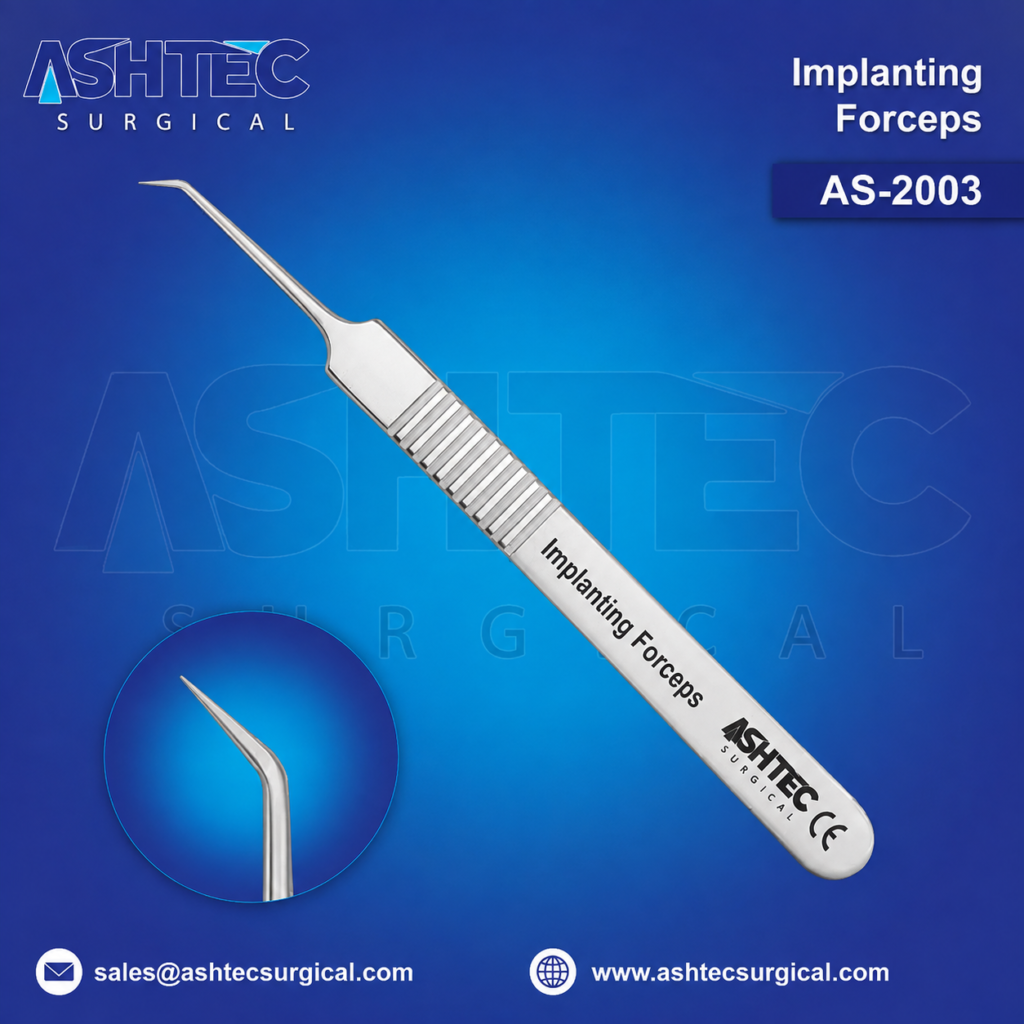
Hair extracting forceps are designed to help professionals handle and remove follicular grafts during the extraction stage. A suitable grip and precise tip can support controlled graft handling.
ASHTEC Surgical provides specialized hair transplant instruments for professional FUE and DHI applications.
Implanting Forceps and DHI Tools
Implanting forceps are used to position grafts in the recipient area. DHI procedures may also use specialized implantation devices that allow grafts to be placed directly into prepared recipient areas.
The instrument should match the professional’s preferred technique and provide comfortable, controlled handling during the procedure.
Graft Handling Instruments
Graft bowls, graft dishes, and trays help organize extracted follicular units during treatment. Stainless steel instruments are commonly used in clinical environments because they can be cleaned and processed according to appropriate protocols.
Keeping grafts organized can help maintain an efficient workflow throughout a procedure.
Modern Hair Restoration Techniques
Follicular Unit Extraction
FUE involves extracting individual follicular units from the donor area before they are prepared for implantation. The process requires careful planning, appropriate punch selection, and controlled graft handling.
The donor area, follicle direction, graft characteristics, and treatment plan should all be considered before extraction.
Direct Hair Implantation

DHI uses an implantation device to place follicular grafts directly into the recipient area. This approach allows the professional to control graft positioning according to the planned direction and distribution.
The choice between FUE and DHI depends on the patient’s requirements, professional assessment, and clinical technique.
Clinical Essentials for Hair Restoration
Having quality instruments is only one part of a professional hair restoration workflow. Proper preparation, instrument inspection, graft handling, implantation, cleaning, sterilization, and storage are also important.
Reusable instruments should be inspected before use for damage, corrosion, worn tips, or other issues that could affect their performance. After a procedure, instruments should be cleaned and sterilized according to the clinic’s established infection-control procedures and applicable manufacturer instructions.
Clinics should also maintain an organized inventory of commonly used instruments. Keeping suitable sizes and configurations available can help reduce interruptions during procedures.
.
ASHTEC Surgical is a manufacturer and exporter of surgical and hair transplant instruments, offering products for FUE, DHI, graft handling, and other professional applications. Learn more on the https://ashtecsurgicalworld.com/ or visit the About Us page.
Final Thoughts
Modern hair restoration depends on the combination of professional expertise, appropriate techniques, careful planning, and suitable instruments. FUE punches, extracting forceps, implanting tools, and graft handling equipment each contribute to different stages of the procedure.
Selecting instruments according to the clinical workflow and maintaining appropriate cleaning and sterilization practices can help professionals establish a consistent and organized working environment.
Frequently Asked Questions
1. What are the main tools used in hair restoration?
Common tools include FUE punches, extracting forceps, implanting forceps, DHI implantation tools, graft bowls, graft dishes, trays, and hairline design instruments.
2. What are FUE punches used for?
FUE punches are used to extract individual follicular units from the donor area during an FUE hair restoration procedure.
3. What is the role of extracting forceps?
Extracting forceps help professionals carefully handle and remove follicular grafts during the extraction process.
4. What instruments are used for DHI?
DHI commonly uses specialized implantation devices along with appropriate graft-handling and extraction instruments.
5. Why are graft bowls and dishes important?
They help keep extracted grafts organized during the procedure and support an efficient graft-handling workflow.
6. How should hair transplant instruments be maintained?
Reusable instruments should be inspected, cleaned, sterilized, and stored according to the clinic’s established protocols and the manufacturer’s instructions.