

Hair Transplant Instrument Quality Checklist: What Buyers Should Verify

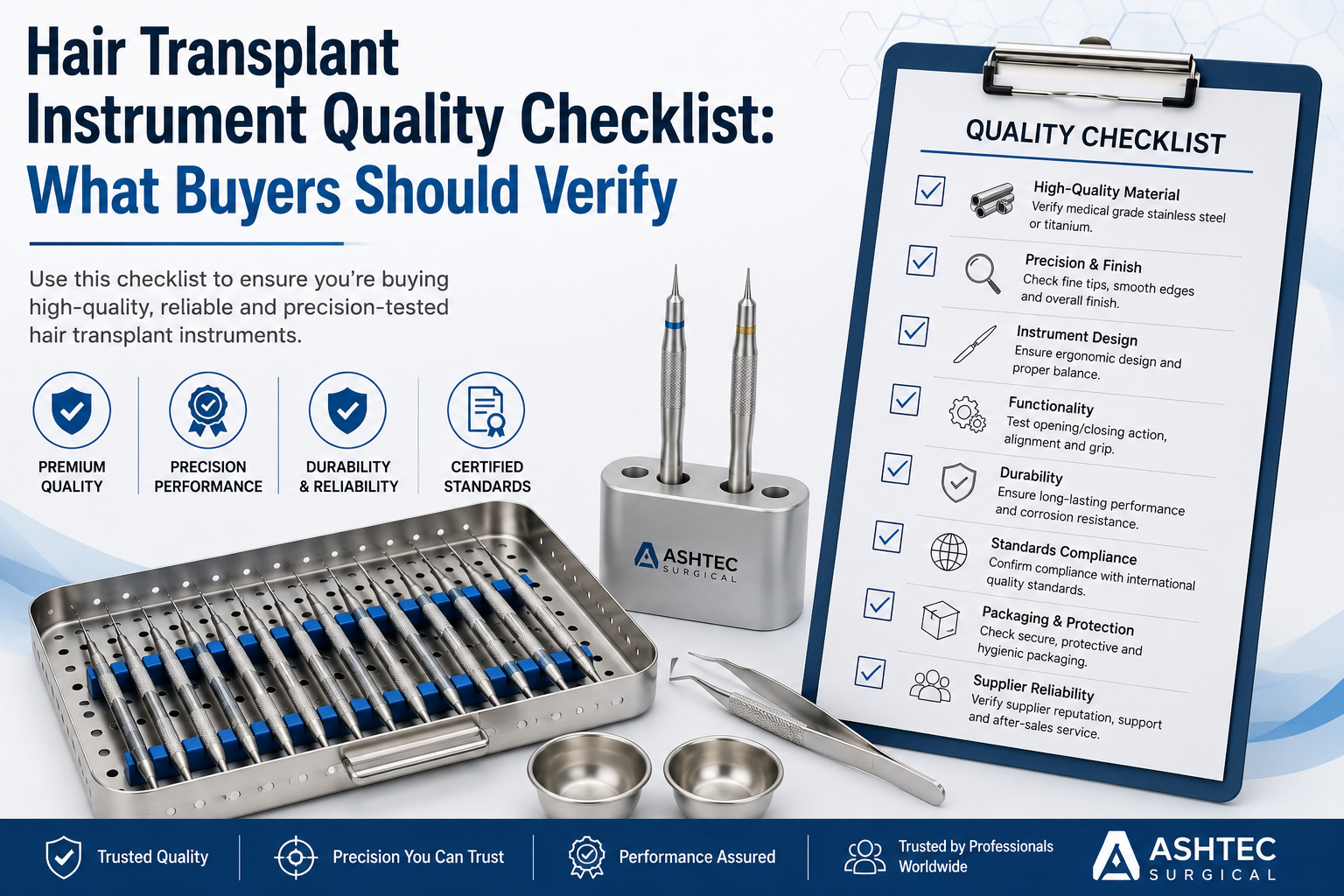

A quality checklist helps professional buyers verify hair transplant instruments before they are added to a clinic’s inventory. The checklist should cover product identity, dimensions, finish, intended application, condition and supplier documentation. A consistent hair transplant instrument quality checklist can help clinics and distributors maintain accurate procurement and inventory records.
Start with product identity
Record the exact product name, pattern, model or reference supplied by the manufacturer. This prevents similar-looking hair transplant instruments from being mixed during procurement.
Keeping the exact product reference in the purchasing record can also make repeat orders and supplier communication more consistent.
Verify physical specifications
Before accepting hair transplant instruments, buyers should verify the applicable physical specifications, including:
- Exact dimensions
- Working length where applicable
- Tip, jaw or punch characteristics
- Material and finish information
- Product-specific components
A clear FUE extracting forceps image fits naturally in this section because buyers may need to verify the instrument’s pattern, dimensions, tip characteristics and overall design against the approved specification.
Check intended application
Every instrument should be matched to its intended professional workflow. A clinic should not assume that an instrument is suitable for a procedure simply because it has a similar appearance to another product.
This is particularly important when purchasing FUE and DHI hair transplant instruments, as different designs and components may be intended for different professional applications.

Inspect condition
Where appropriate, receiving staff should check the instrument for visible damage, surface issues, alignment, joints, tips and other product-specific characteristics according to the supplier’s information and clinic procedures.
Inspection should be based on the applicable manufacturer information and the clinic’s approved receiving process rather than appearance alone.
Verify documentation
Keep current supplier specifications and applicable manufacturer instructions with the procurement record. This is especially useful for repeat orders and hair transplant instrument maintenance.
Documentation should correspond to the exact product or reference being purchased whenever applicable.
Simple receiving checklist
- Match product name and reference.
- Confirm dimensions and pattern.
- Check material or finish information.
- Inspect condition.
- Confirm intended application.
- File supplier documentation.
Following the same process for every delivery can help clinics and distributors maintain more consistent hair transplant instrument quality and inventory records.
Frequently Asked Questions
Why use a receiving checklist?
A checklist creates a consistent process for verifying that delivered instruments match the order and specification.
Should quality be judged by appearance alone?
No. Appearance is only one observation. Product identity, specifications, intended application and documentation should also be verified.
What should buyers check when receiving FUE and DHI instruments?
Buyers should verify the product reference, applicable dimensions, design characteristics, condition, intended application and relevant supplier documentation according to their approved receiving process.
How can buyers verify instrument dimensions?
Buyers should compare the actual instrument dimensions with the specifications stated in the purchase order, product documentation or approved specification sheet.
What should buyers check for instrument damage?
Buyers should inspect instruments for visible damage, deformation, corrosion, scratches or other conditions that could affect their intended use and should document any discrepancies during receiving.
Why is product documentation important?
Product documentation helps buyers confirm product identity, specifications, intended application and other relevant information before instruments are accepted into their inventory.
Conclusion
A specification-based hair transplant instrument quality checklist helps clinics, distributors and professional buyers follow a more consistent approach when evaluating instruments before accepting a delivery or finalizing procurement records. Rather than relying only on visual appearance, buyers should review important factors such as product identity, dimensions, design characteristics, intended application, physical condition and relevant supplier documentation.
For FUE and DHI instruments, accurate specifications are particularly important because different instrument designs and sizes may be intended for different professional applications. Comparing the received products with the approved purchase order, product specifications or supplier documentation can help identify discrepancies before instruments are added to inventory.
A structured receiving process can also make inventory management easier by creating a clear record of what was ordered, what was received and whether the products meet the required specifications. Any visible damage, incorrect product references, dimensional differences or documentation issues should be recorded and addressed according to the buyer’s internal procurement and quality procedures.
Ultimately, a quality checklist is not simply a final inspection step. It can become part of a broader procurement and inventory management process that supports consistency, accurate product verification and informed purchasing decisions. By applying the same verification criteria to every delivery, buyers can maintain clearer records and select hair transplant instruments based on documented specifications and intended professional requirements rather than appearance alone.